
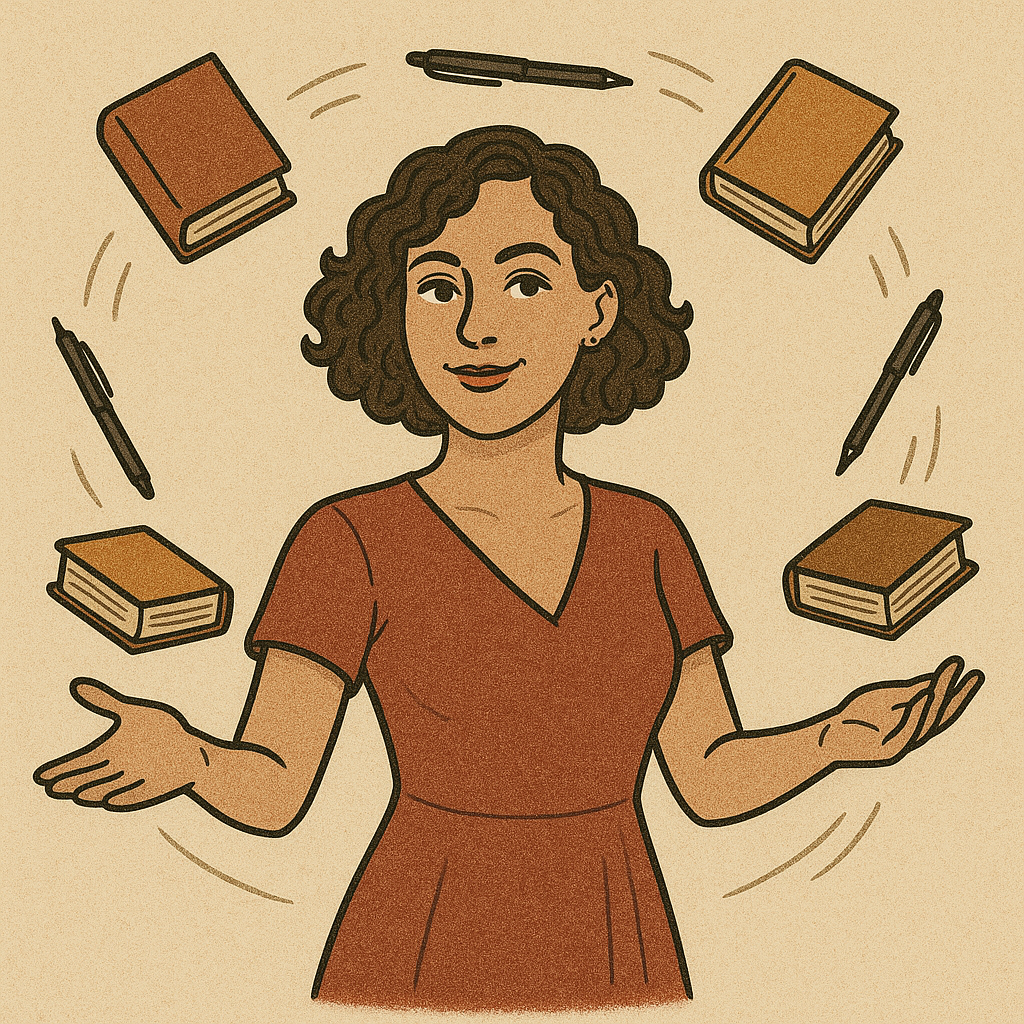
Hello there, my name is Brandie, and I’m a pro at juggling multiple projects simultaneously. My current works-in-progress include one novel, a novella, two children’s books, two coloring books, and travel and investigative journalism.
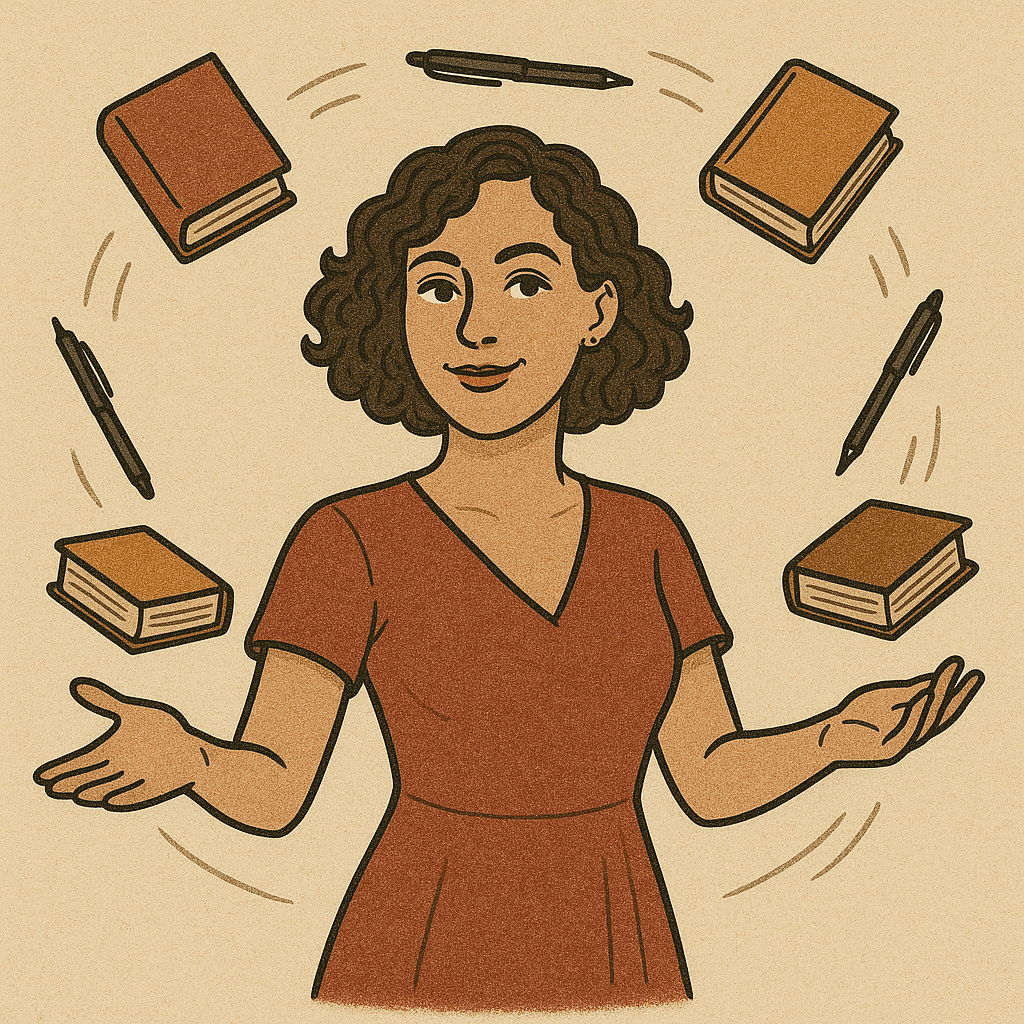
This multi-faceted project approach works for me, and not just because I have ADHD, but because it keeps writer’s block at bay. That doesn’t mean I don’t encounter it, but I’ve learned how to work with it. Even better, I’ve learned how to turn writer’s block into inspiration for my other projects.
The hardest part is learning to identify writer’s block. Sure, it’s easy to recognize that you’re stuck when you’re avoiding writing completely or staring at a blank page, but writer’s block can take many forms. The good news is, once you realize you’ve hit a block, you can take steps to address it. And I’ve got a shortcut method. How? By looking for writer’s block #1 symptom: procrastination.
What does that look like? Well, it happens out of nowhere. You find yourself distracted, doing something else. Maybe you’re suddenly washing sweaters in the summer heat, or that chore you didn’t want to do 30 minutes ago is now beckoning you. Or you’re online shopping, ordering groceries, or checking your email. Basically, you’re doing anything but what you’re supposed to be doing: writing.
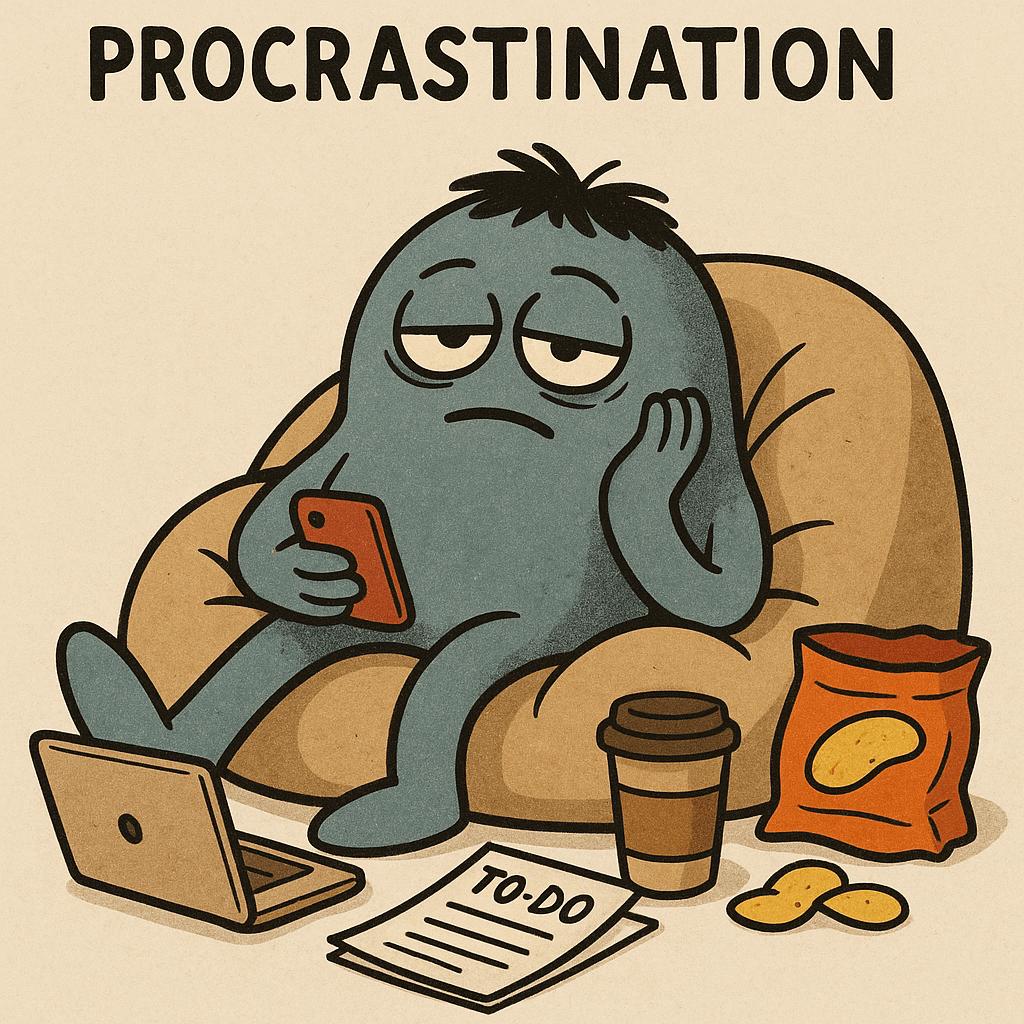
Congratulations, you’ve met our friend procrastination! Procrastination is one of the main presentations of writer’s block, and it’s super easy to get swept into it.
Sometimes we don’t even realize we’re doing it because it seems like we’re working on a good task (aka ”If I’m not going to write, at least I got this done!”).
So, what exactly is procrastination? I define it as anything that pulls us away from our writing— in other words, anything that causes us to delay getting that next sentence onto the page.
Procrastination is anything
we do outside of our intended task
Once you’ve identified that you’re stuck, your next step is to determine what type of procrastination you’re wading through. Yes, there are both good and bad types, and it can be tricky because sometimes bad procrastination feels so right!
Raise your hand if you’ve ever stopped to do some research during a writing session. We all need to sometimes, and it’s not a bad thing— if you can stay focused and get in and out quickly.
The problem occurs when writers become sidetracked and go down self-professed rabbit holes, where one minute they’re exploring a historic detail and the next they’re ordering groceries to make medieval ice cream. Sure, it’s fun and will give you sensory details to work with. But do you really need to stop and do that right now? Will it help you get your next sentence on that page? No, you’ve now given yourself an excuse to delay! And you’ll have a mess to clean in the kitchen.
There is a time for research, and that time is not now. Now is writing time. Insert a note in your draft to add research later. But if you absolutely can’t resist, then set a reasonable length timer (5-10 minutes) and stick to it.
Email is another major procrastination trigger. It’s best to avoid your inbox altogether, but if you need to look for a piece of correspondence, be mindful not to let yourself get sucked in.

And before you dive in, ask yourself if you really need to see that email to get to your next sentence, or if it’s something you can add in later. But whatever you do, don’t spend your writing time cleaning out your junk email folder. I heard this one used the other day. Come on, folks! Our junk folders are self-cleaning. That’s as pointless as washing the inside of your garbage disposal. If you lose something, stick your hand in there and get it. Otherwise, flip on the switch and let it do its thing.
You should also avoid paying the bills, scheduling appointments, loading the dishwasher, or doing any task that you’re guaranteed to do later. This time is for your creativity, not your obligations.
So what happens when you find yourself guilty of procrastination? First, give yourself grace and understand that it happens to the best of us. But then stop and intervene. Don’t give up so easily. Try to refocus. Think of this as training your creative muscle. You gotta work past your comfort zone to achieve growth, and, as your trainer, I’m sharing five tactics that’ll help you beat writer’s block.
Beat Writer’s Block Tactic #1: Stare at that Blank Page
Try setting a timer for 15-20 minutes and refrain from doing anything else during this time. Yes, you’re actually supposed to stare at that blank page.

Get good and uncomfortable. You should be unsettled! That page of yours is lonely and needs words. And your existing words need friends.
You have one goal: write that next sentence. Ask yourself what that will take. Think simple— get your character into a room and chilling in a chair. Who cares if what you wrote is boring or grammatically incorrect? You can cut that clunky thing outta there later. You also get to throw out the ‘ole ”show, don’t tell” rule. Your only objective right now is to write something down. Do anything to get words on that page! Because once the pen is on the paper, productive writing usually follows. Chances are that you’ll get words down and feel motivated to keep going, but if your timer runs out before anything happens, then try a different tactic.
Beat Writer’s Block Tactic #2: Write a Different Part of Your Story
I wrote my entire novel out of order (yes, on purpose), and switching scenes was hands-down my best defense against writer’s block. But if the thought of doing that gives you hives, then try a smaller jump.

Is there any part of your current scene you can imagine? Even the tiniest sliver? If so, get it down. You have permission to skip ahead and start writing. This works for anything that’s living in your head. Permitting yourself to do this trains your creative muscles. And remember, it’s just a first draft, so get it down and leave it alone!
Beat Writer’s Block Tactic #3: Write about Your Story

Another tactic you can use is to write about your story. Flesh out the world’s background details. Invent a special holiday or a tradition.
Or, interview your main character. What’s her favorite kind of pizza? Who was her best friend growing up? How did people sign her yearbook? You’re not adding to your story’s word count, but these exercises will spark creativity and enrich it.
Beat Writer’s Block Tactic #4: Follow the White Rabbit (But Only for a Few Minutes)
It’s super easy to let our creativity distract us. It seems like the best ideas always come while I’m at my desk, slogging through a project.
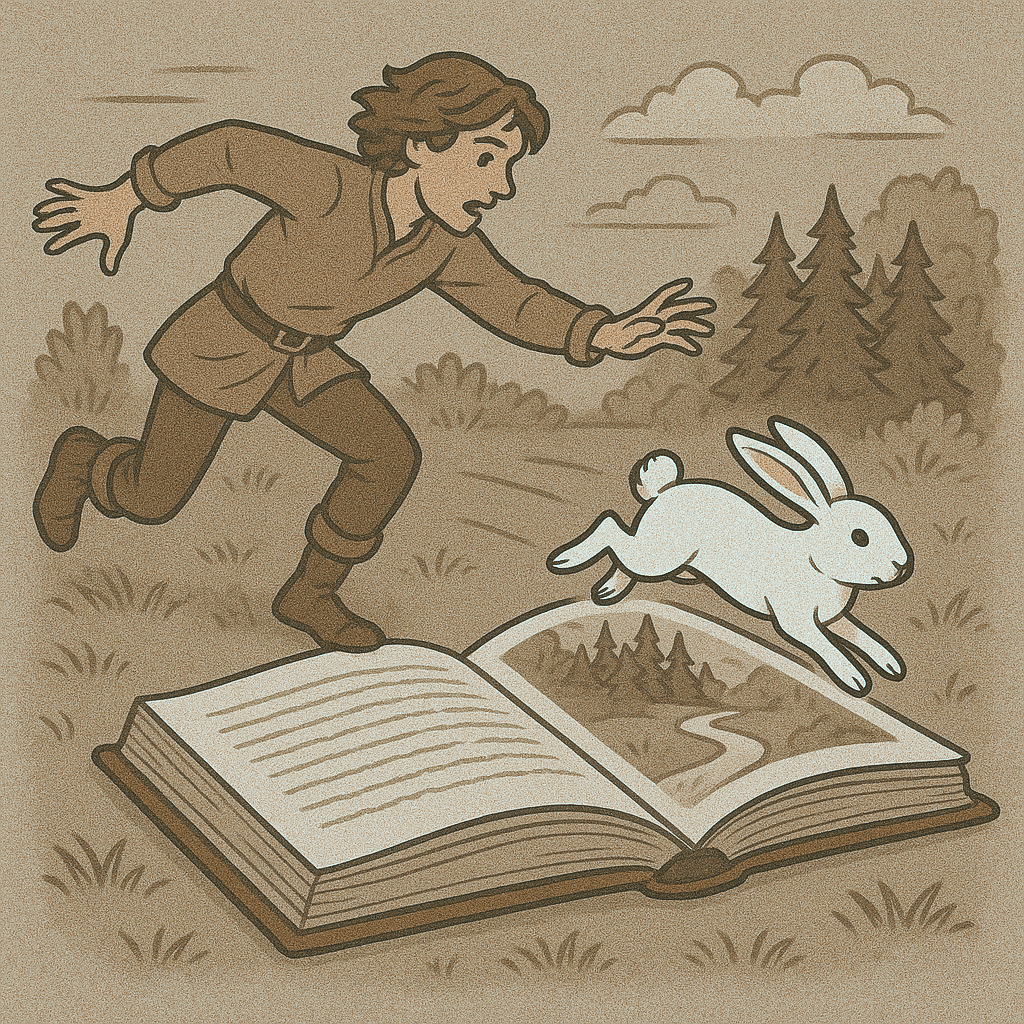
Yes, that idea may be amazing. Don’t discount it. But just because you have an energizing new idea does not mean you have to run with it immediately. Because here’s a secret— you may start out full throttle on your shiny new idea, but you’ll soon hit the wall on that one, too. So recognize this for what it is— your brain finding amazingly creative ways to distract you.
To fix this, allow yourself a few minutes to do a brain dump on a page. I keep what I call a ”slush project” (sometimes referred to as my ”bunny plot folder”), and it’s where I jot down notes and ideas that come to me, usually when I’m desperately trying to focus on something else. But whatever you do, don’t start writing. Note-taking only here— just enough to decompress so you can refocus on your project. Set a timer if you need to.
Beat Writer’s Block Tactic #5: Switch Projects
Let’s suppose today’s not your day. You’ve tried all the tactics, and it’s just not happening. That’s okay. This is where switching projects comes into play. If your mind can’t focus on the task you want it to, then find something it will focus on.
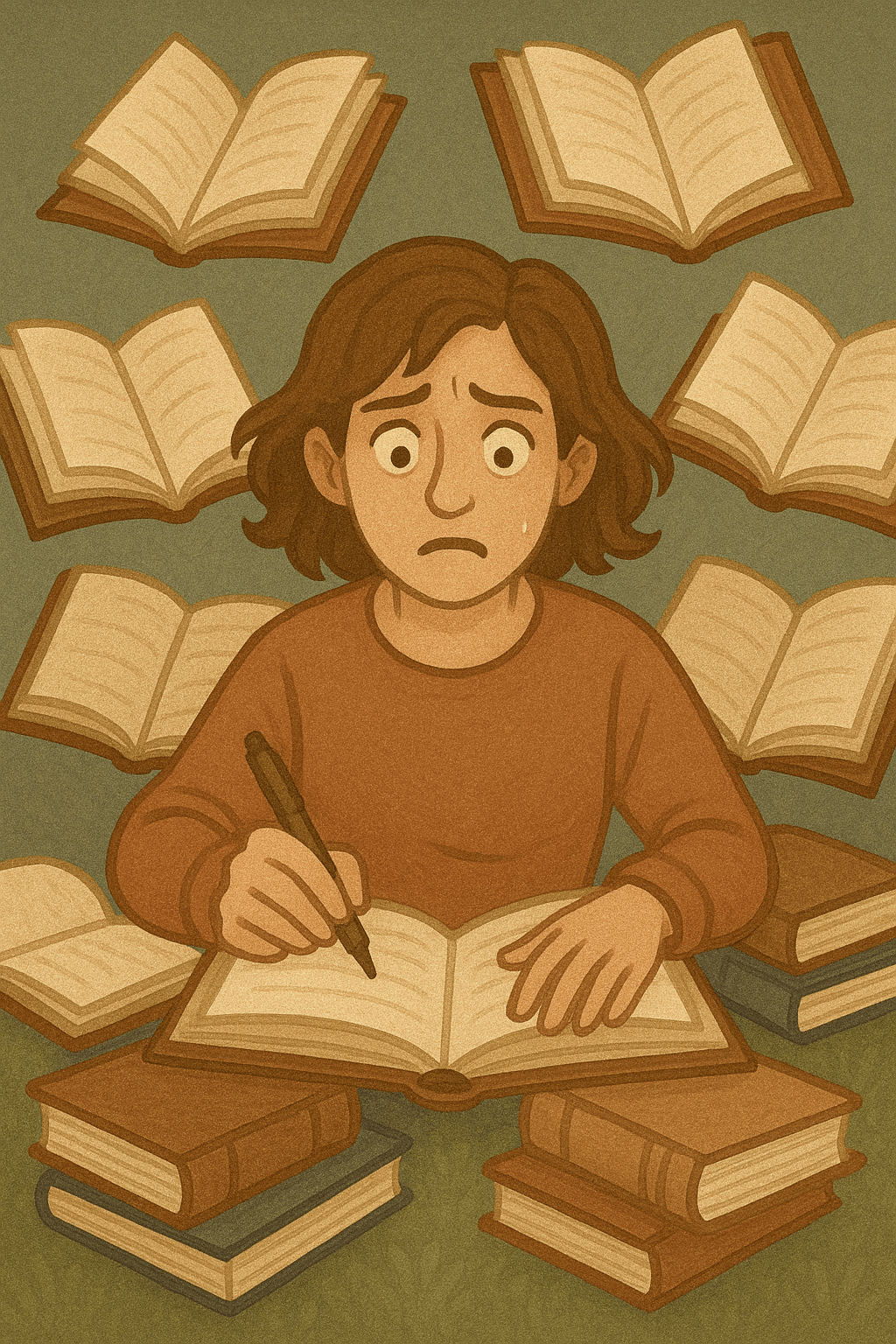
This is definitely not for everyone and requires some practice. I’ve found this method particularly helpful for my ADHD and for my career as a self-employed freelancer.
I have several types of projects, not all of which involve creative writing. I also have a lot of administrative tasks (aka, ”author business” items) that are always outstanding. They’re redundant and not my favorite thing, which makes them really hard for my squirrel-chasing brain to focus on. Those are my prime targets for productive procrastination. When my creative brain is fried, performing unwanted tasks is an excellent way to procrastinate and maximize productivity at the same time.
Switching tasks is challenging. It does get easier, but I’ve got a couple of tips to help. First, figure out what works for you. This will take trial and error. Personally, I can’t switch in and out of different stories on a whim. It takes me too long to get back into the flow of one world and then get reimmersed in another. It’s just not efficient for me. Poetry, however, is short form that I can get in and out of quickly.
If you’re still struggling to find something, ask yourself what you dread doing, because that’s what you should focus on. Schedule out your social media posts, write a newsletter draft, create a coloring book, or update your blog. Whatever you’re putting off, now is the time. If you’re going to procrastinate, you’re gonna do it right!
What if you’ve tried your best and the juices just aren’t flowing? If all else fails and you can’t seem to get into anything? In that case, you have my permission to take a long nap.

Go ahead, partake in the ultimate afternoon activity. Wake up and return to your desk refreshed. Or, perhaps even give yourself the grace to take the rest of the day off. And don’t forget to recharge yourself. Eat, stretch, exercise, play, and engage with friends and family.
Thanks for reading, and may your future days be free of writer’s block and full of productive procrastination.


Leave a Reply