
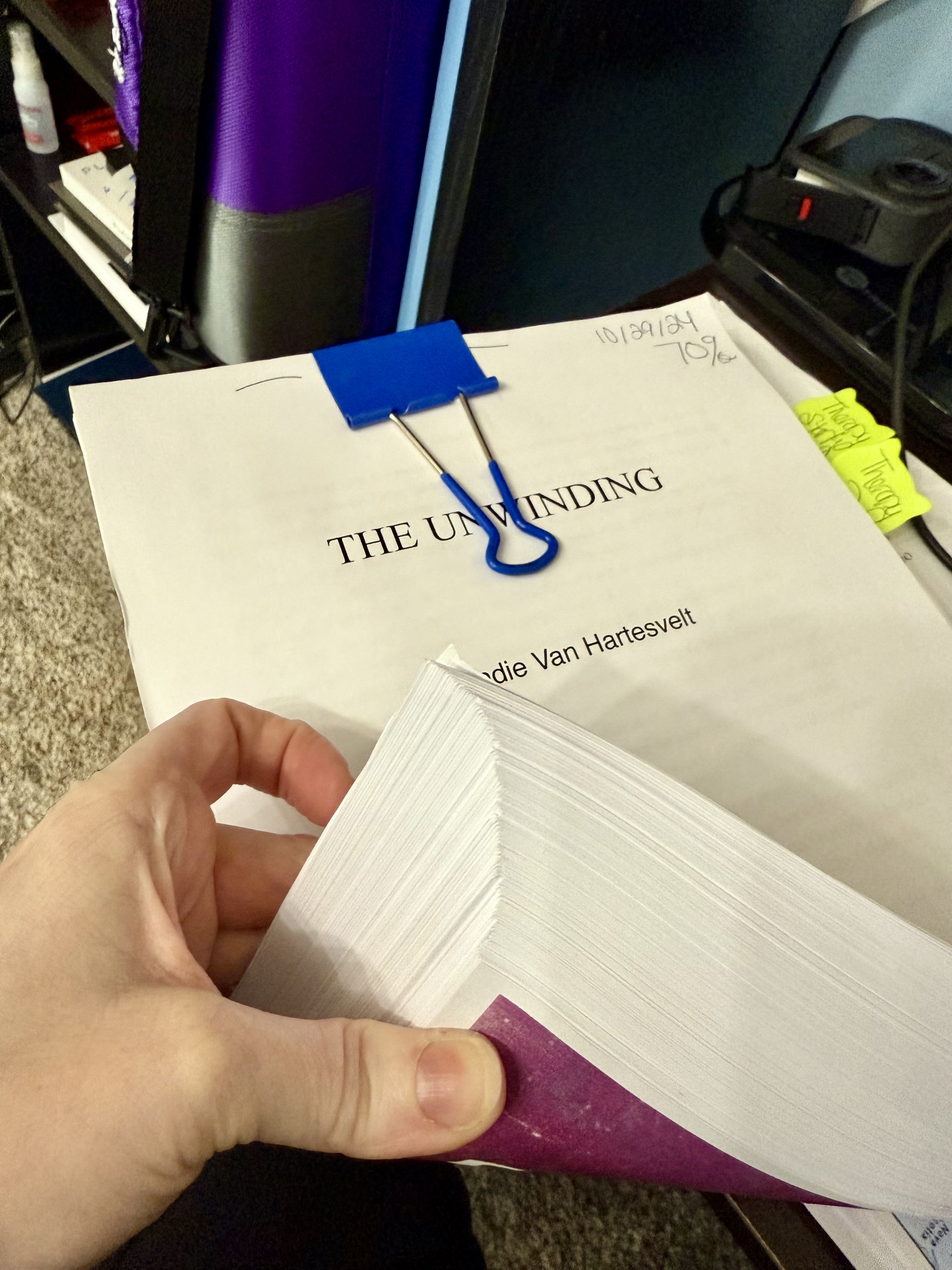
I see it all the time— writers getting stuck on the same parts of their novels, and the most common culprit is good ole’ Chapter One. After all, it’s the first chapter of your book, and therefore the most important, right?
You’re not wrong, I’ll give you that. Your first chapter should be clean, polished, and engaging. Simply put, it should be your best work. You should just wait on when you do that work.

Did you know that your first chapter might change? It’s common for chapters to be shifted around during the developmental editing phase, especially that first one. You might find yourself opening in an entirely different part of your book, your well-polished first chapter now falling somewhere else. The original first chapter of my novel, The Unwinding, is now number 56! This lesson was taught to me in college, when my creative writing teacher took our finished essays, handed them back, and told us to start our stories someplace else. I grumbled and swore I couldn’t. After all, my story started where it had on purpose! But I’ve always been a straight-A student, so I diligently took to my assignment, and my essay transformed from a good read to a phenomenal piece that was used as an example for subsequent classes.
You’ll also have an easier time polishing that first chapter if you come back to it later. It takes a bit for a story to come alive to its author. Returning to the first chapter after you’ve firmly found the story’s voice will help enrich it. You’ll have more details. The characters and settings will feel more alive to you, enabling you to convey that to the reader. You’ll fill in the blanks and spin a richer, more engaging opening scene.
So, just how much work should you put into that first chapter? My answer is: just enough to get through to the next. Then the third, and so forth, until you reach the end of your novel. Because it doesn’t matter how polished that first chapter is if you never make it to the last. Write it and let it go. I call this fast drafting, and while this is the first time you’ll hear me talk of it, it won’t be the last. That’s because it’s fundamental to how I write. Fast drafting enabled me to complete the first draft of a 460-page novel using one simple idea: don’t edit. Move forward, not backward. Resist the urge to re-read, or to go back and fix that last paragraph.

It’s easy to tell someone not to edit, but much harder to practice. I know a writer who puts masking tape over her backspace key. It doesn’t prevent her from editing, but each time she hits that tape, it’s a tactile reminder that she’s stalling her progress.
But how can you prevent yourself from editing? Especially when it irks you to see things you want to change on the page?
One key to that process is giving yourself permission to write something that no one else will read. I call my first draft my ‘trash draft’. Writing becomes easier once you fully embrace the freedom of writing your novel solely for yourself. Your mind flows uninhibited through your fingertips. Your courage grows as you realize that the words you’re afraid to let sit are better than you thought. You learn to trust your instincts. You hit snags less often and get over blocks a bit easier, and all of this happens because you’re entirely open to the creative experience.
Remember you will be editing this again (and again, and again…), so there’s plenty of time to go back to fix that typo you just spotted, or to reword that sentence. An issue you spot once will be caught again. But if you go in to change that ”one tiny thing”, you’ll be fixing all the typos. And rewording that one sentence turns into the entire chapter.
One surprising thing I’ve learned is that my first drafts are always better than I think they are, especially when I rode the struggle bus getting it out. Those are the times I practically closed my eyes and flinched my way through writing, throwing anything down— my brute force method of getting through the ole’ writer’s block. I get through those moments by reminding myself I can edit this later. Somehow, I’m always surprised when later looks a lot better than I felt when writing it. And yes, sometimes what I’ve written is crap. But that crap sentence gets me to my next, then the next, until I’m back in the flow. Later, you can confidently cut that clunky thing right out of there.
So please, leave your first chapter alone until you type those most wonderful words: ”The End.”
Until next time:
• Write that sentence
• Avoid the backspace key
• Go forward, not backwards
• Subscribe for more original content
Happy Writing!
~Brandie

Leave a Reply