
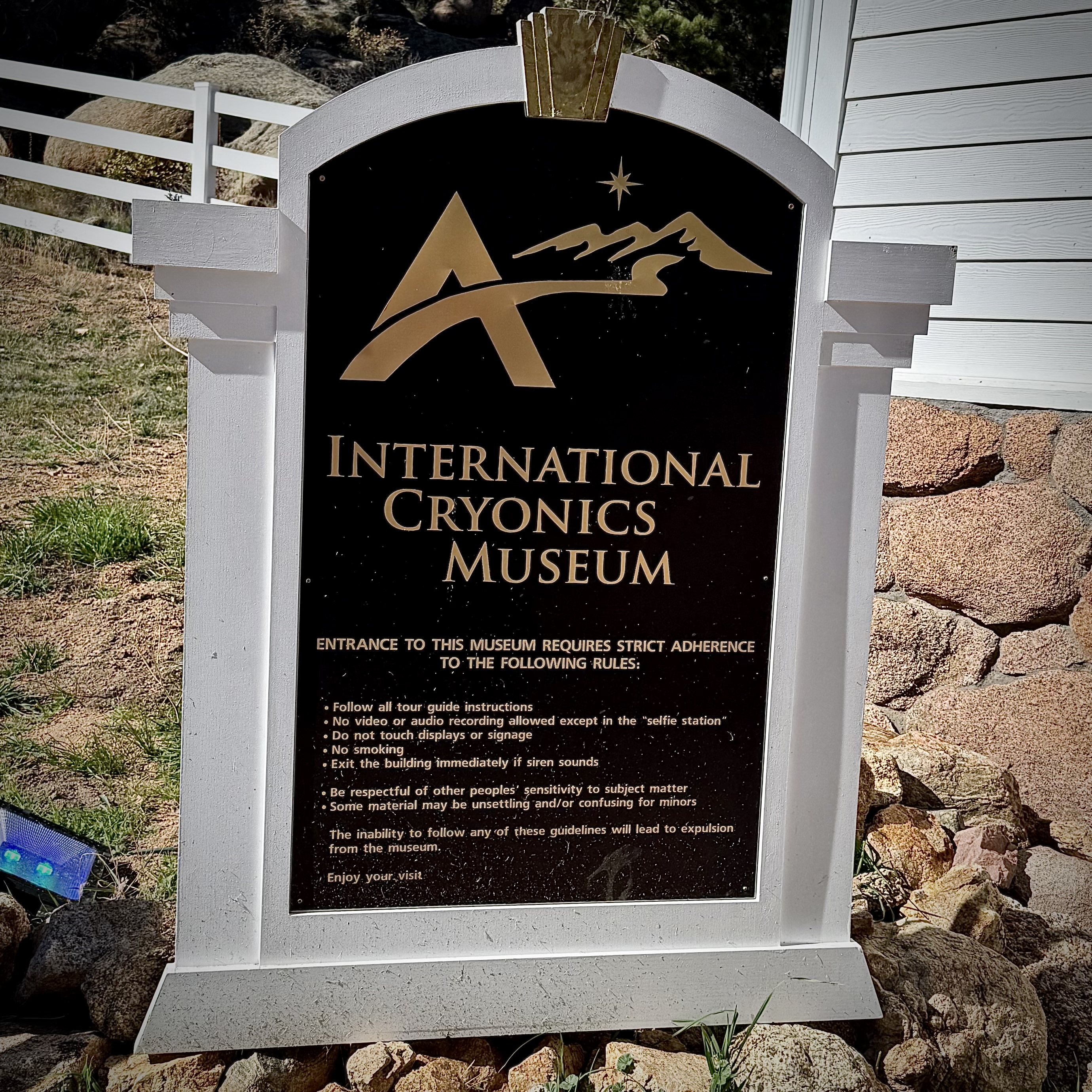
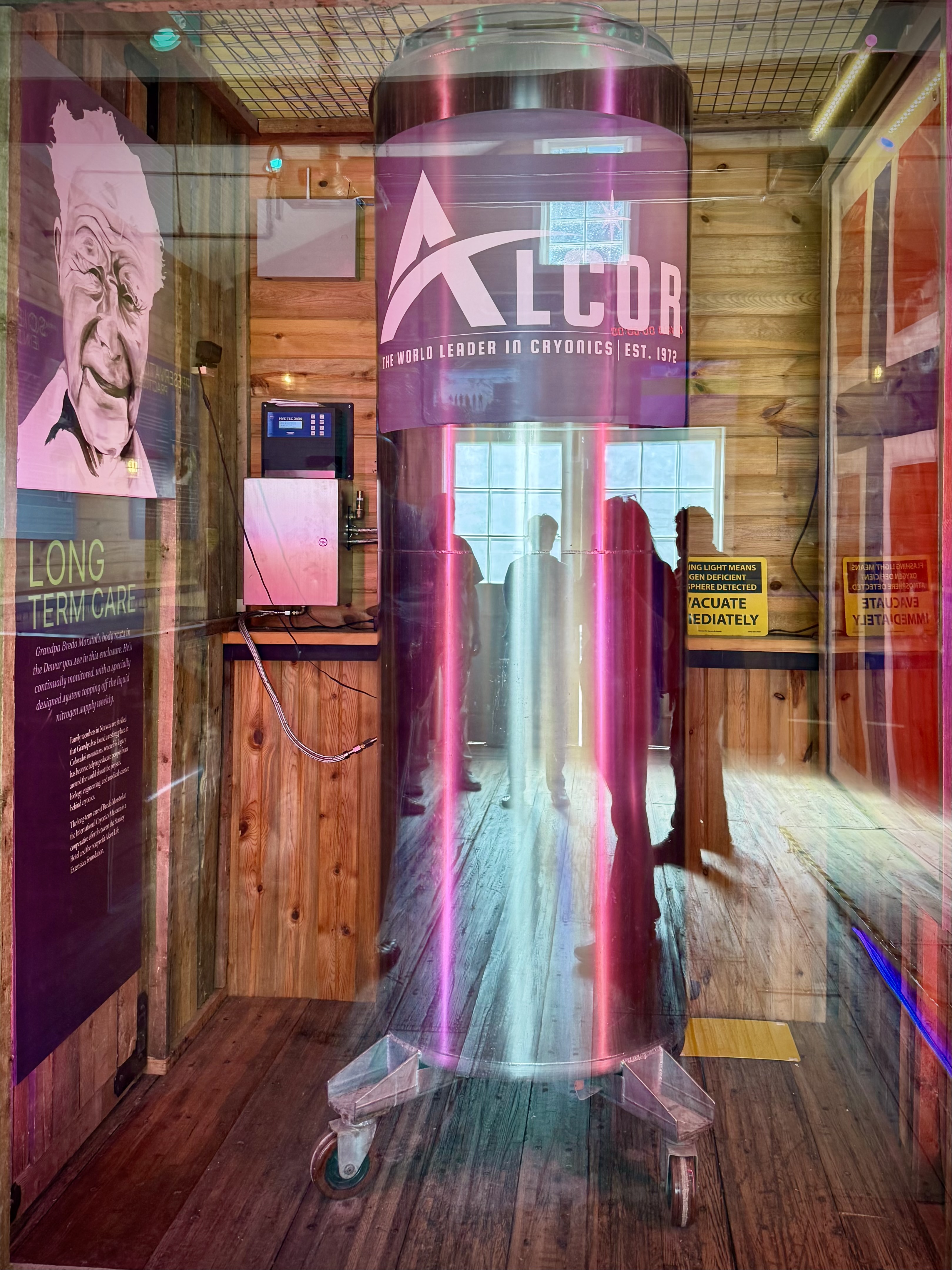
I recently visited the International Cryogenics Museum on the grounds of The Stanley Hotel in Estes Park, Colorado—yes, the very hotel Stephen King made famous with The Shining. It’s already a historically creepy place, but did you know it’s also home to something even more uncanny? This eerie hotel’s woodshed (yup, that one, if you’ve seen the movie) contains a frozen dead guy.
A Frozen Dead Guy’s International Journey
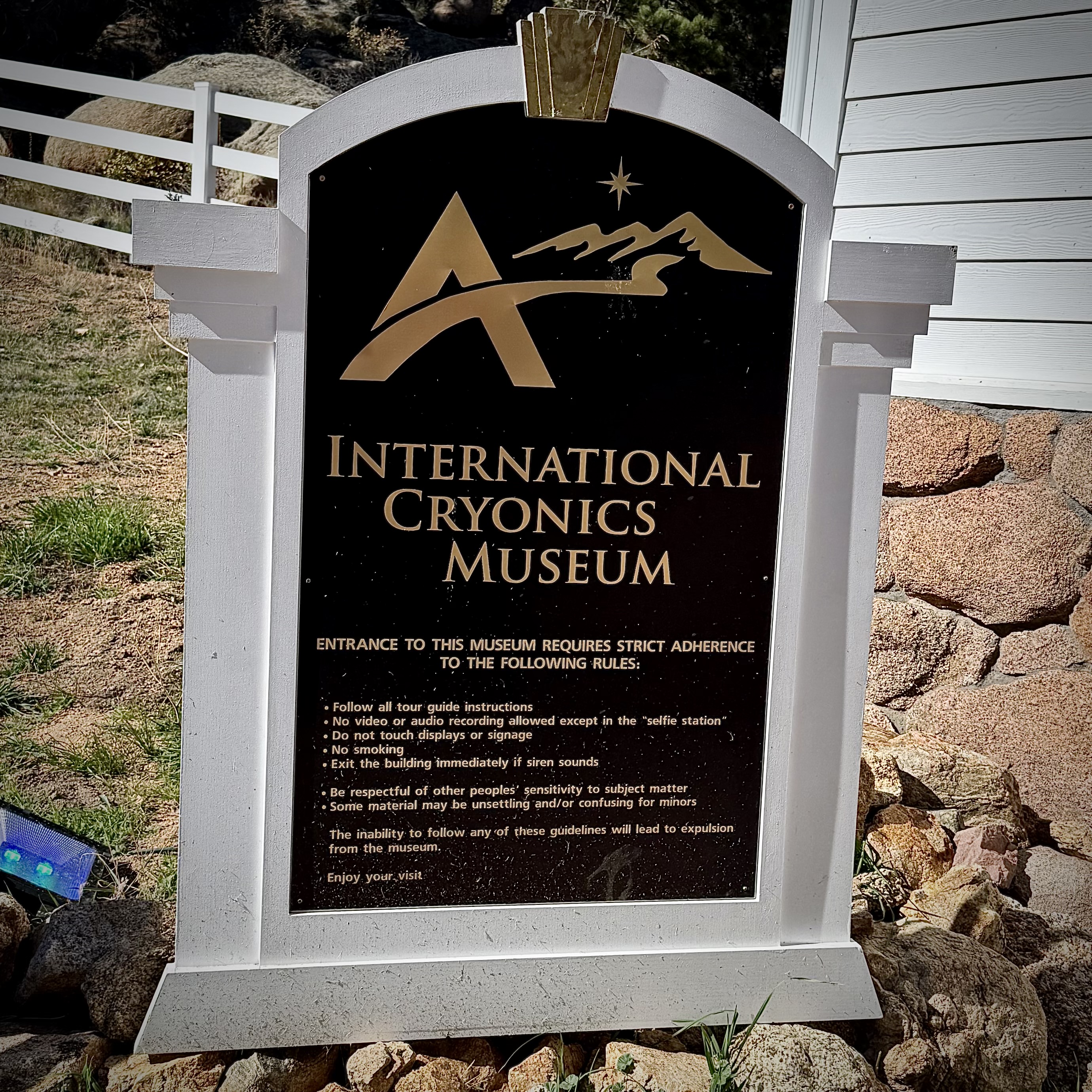
The true story behind Bredo Morstøl, otherwise known as the “frozen dead guy,” is stranger than fiction. It starts in Norway, where his grandson Trgve honored a pledge to keep his body frozen until a time when he might be revived. He put his grandfather in an aluminum casket on dry ice and smuggled his body to Oakland, California, to the Trans Time cryonics facility. There, they stored him in liquid nitrogen from 1990 to 1993.
Trgve and his mother, Aud (Bredo’s daughter), then moved to Nederland, Colorado, hoping to start their own cryonic company. There, his body was placed on dry ice inside a shed in their backyard. Bredo was joined that same year by a deceased individual named Al Campbell, whose body would later be reclaimed and cremated by his family.
Meanwhile, the house Aud lived in was unfinished and lacking plumbing and utilities. Her son Trgve was deported back to Norway for overstaying his visa, and she was evicted soon after. She found herself in legal trouble and was ordered to remove Bredo’s body. Aud sought public help, and the resulting media coverage rallied community support. Bredo Morstøl’s body was grandfathered into regulation and therefore allowed to stay. The company Tuff Shed came in and built one of its trademark buildings on the property for Bredo to reside. Even then, Bredo required nearly a thousand pounds of dry ice every two weeks to remain frozen.
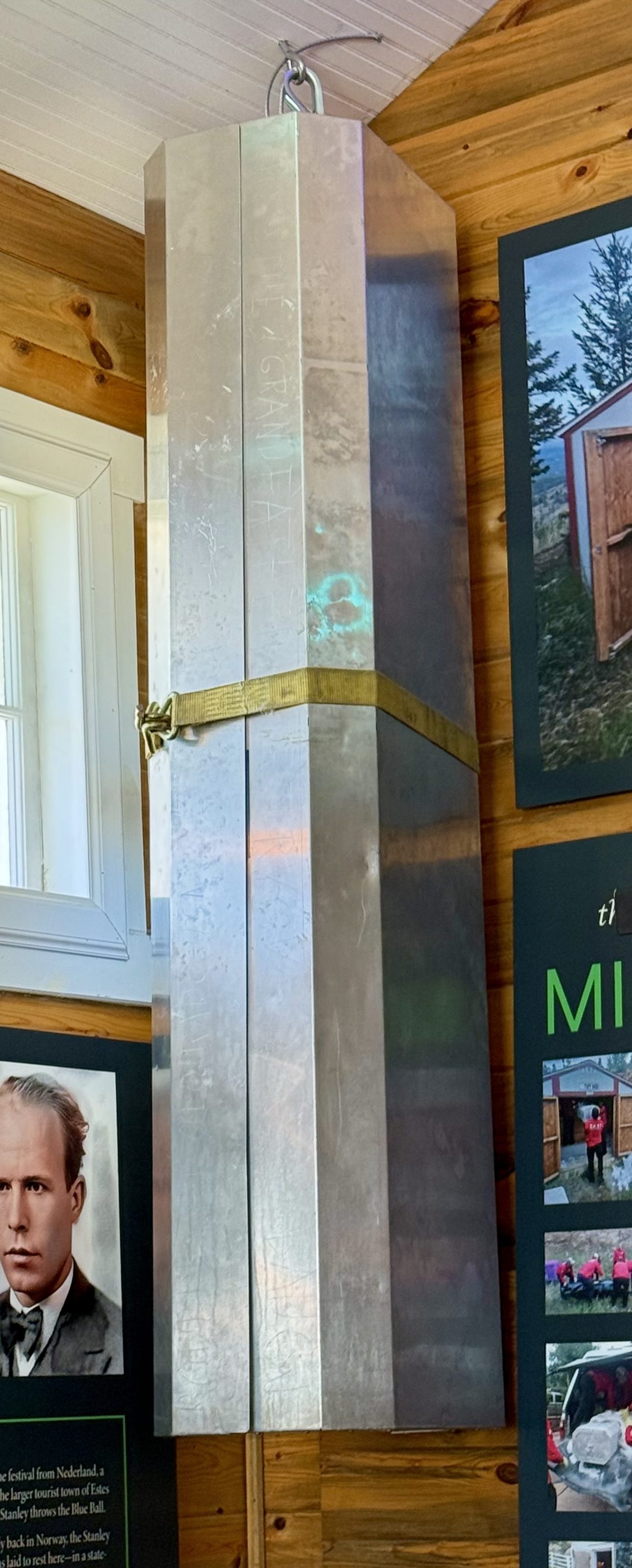
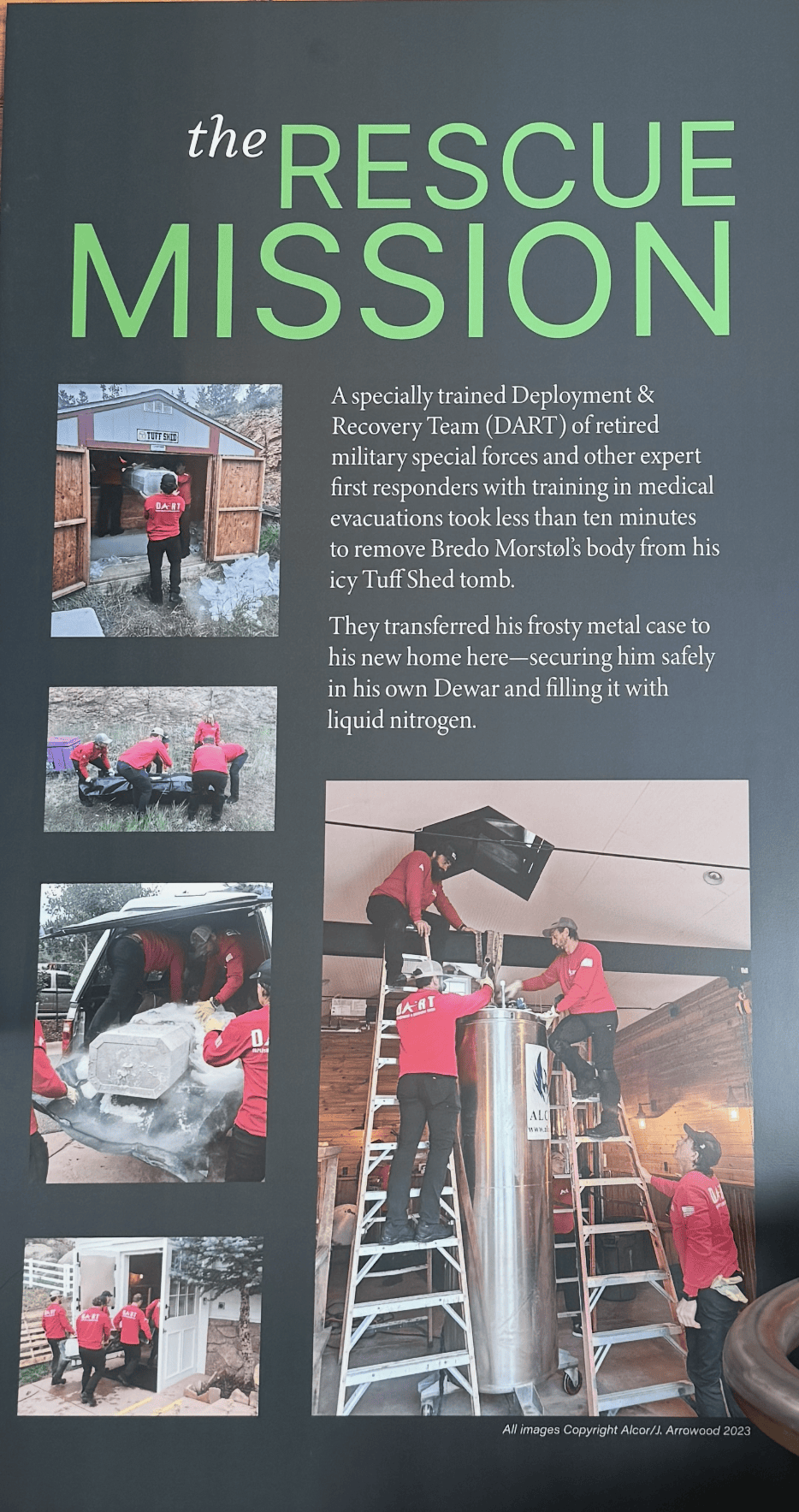
Each year, the community stepped up, and the number of people faithfully lugging donations grew. In 2002, the city of Nederland, Colorado, officially ordained an annual ‘Frozen Guy Days’ festival. The festival became too big to manage locally, and in 2023, both Bredo’s body and the event moved to the grounds of The Stanley Hotel in Estes Park, Colorado—aka, inspiration for Stephen King’s The Shining. After all, argued the Stanley’s then owner, doesn’t The Shining end with a frozen dead guy? There, Bredo sits suspended in liquid nitrogen, the main exhibit at the International Cryogenics Museum.
That’s the wild part. The practical part is even more interesting.
Cryonics Today: Not Sci-Fi, But Not Simple
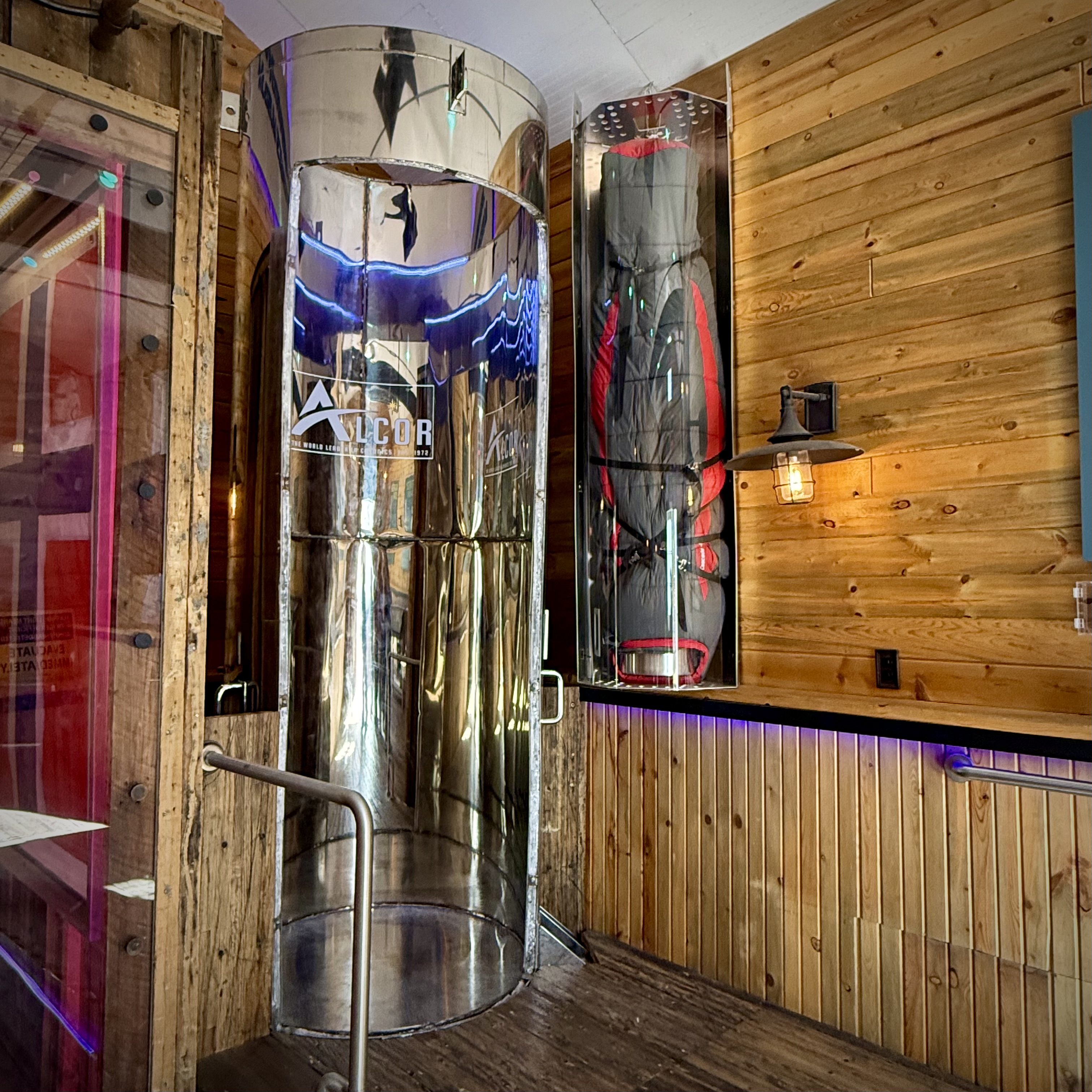
Despite the public perception of cryonics as science fiction, hundreds of people in the US are currently preserved in a cryogenic state. Only a handful of organizations worldwide handle this work, and each has its own processes and technologies. Bredo Morstøl is being managed by the Alcor Life Extension Foundation, which specializes in vitrification, the turning of biological tissue into a glass-like state to prevent ice-crystal damage (aka freezer burn). That technique is currently used in organ preservation for transplants. It’s not the same as whole-body revival, of course, but it’s a scientifically adjacent field with momentum. Progress in one advances the other.
How It Works: The Logistics of a Second Chance
Here’s the operational overview, as explained during the tour:
- A standby team prepares, with the goal of being present at the time of death
- The team begins rapidly cooling the body within six minutes of legal death
- The body is stabilized, transported, and placed into a long-term storage container (called a dewar) and filled with liquid nitrogen
- The vessel is topped off weekly until the person is revived
- A person is woken when two conditions are met:
- (1) The technology exists to safely wake the person and reverse any damage caused by the preservation process; and
- (2) Whatever caused the person’s death can be cured (cancer, organ failure, etc)
How Much Does it Cost? The Price of Living Forever
So, how much does it cost to live forever? The answer is about $300,000, and most pay for it by taking out life insurance policies and signing them over to Alcor. For many, that’s tantalizingly affordable. What if, instead of padding your loved one’s pockets upon death, you wagered on reanimation? And if you can skirt death once, what’s to say you couldn’t do it again?
You can also opt for a “neuro” option (preserving only the head or brain), though I didn’t catch the price difference during my visit. People balk at the idea, but who knows? A lot of progress is being made in research on brain-computer interface devices.
We don’t know if or when cryonics will deliver on its lucrative promise. But the research is real, and there’s a plausible future in which cryo-preservation is a commonly chosen path. For now, we’re living on the cusp between sci-fi and reality.
Thanks for reading. Until next time…
Works Cited
“Al Campbell.” Cryonics Wiki, cryonics.miraheze.org/wiki/Al_Campbell.
“Alcor Life Extension Foundation.” Wikipedia, Wikimedia Foundation, en.wikipedia.org/wiki/Alcor_Life_Extension_Foundation.
“Bredo Morstøl.” Cryonics Wiki, cryonics.miraheze.org/wiki/Bredo_Morst%C3%B8l.
“Brain-Computer Interface Enables Independent, Accurate Communication for Man Living with ALS.” UC Davis Health, June 2026, health.ucdavis.edu/news/headlines/brain-computer-interface-enables-independent-accurate-communication-for-man-living-with-als/2026/06.
“Frozen Dead Guy Days.” Wikipedia, Wikimedia Foundation, en.wikipedia.org/wiki/Frozen_Dead_Guy_Days.
“Frozen Dead Guy Tour.” The Stanley Hotel, stanleyhotel.com/tours/frozen-dead-guy-tour/.
McKee, Spencer. “The Story of Bredo Morstøl, Colorado’s Frozen Dead Guy.” The Denver Gazette, 28 Oct. 2019, denvergazette.com/2019/10/28/the-story-of-bredo-morstol-colorados-frozen-dead-guy-75dba0a6-1ae5-5faa-922d-e96c3e4e0e4a/.
“The Story.” Frozen Dead Guy Days, frozendeadguydays.com/story/.


Leave a Reply